O CORONAVÍRUS, AS EPIDEMIAS E O SUS
O CORONAVÍRUS, AS EPIDEMIAS E O SUS 6 DE FEVEREIRO DE 2020 Odorico Monteiro é médico, pesquisador da Fiocruz, professor da UFC e vice-presidente do PSB Ceará odorico.monteiro@ fiocruz.br O …


LARIISA · Fiocruz Ceará

O CORONAVÍRUS, AS EPIDEMIAS E O SUS 6 DE FEVEREIRO DE 2020 Odorico Monteiro é médico, pesquisador da Fiocruz, professor da UFC e vice-presidente do PSB Ceará odorico.monteiro@ fiocruz.br O …

SESI e IEL Ceará reunem-se com pesquisadores LARIISA na FIOCRUZ 3 de fevereiro de 2020 Foto: Divulgação/FIEC Estiveram reunidos no dia 21/1, no prédio da Fiocruz Ceará, membros do SESI …
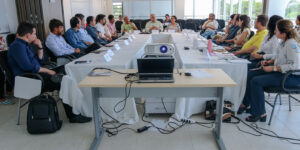
Workshop reúne pesquisadores do LARIISA no planejamento das ações 22 de janeiro de 2020 Fonte: Arquivo Pessoal Um Workshop de Planejamento do Laboratório de Redes Inteligentes e Integradas em Saúde – …

Abstract: LARIISA is an intelligent framework for decision-making in public health systems. The project had its initial ideas conceived in 2009. Since then it has evolved in the academic and market perspective, becoming a product in 2018 called GISSA. This article presents the architectural evolution of LARIISA, the functionalities implemented, the scientific and commercial results achieved with GISSA. Ontology and Data Mining (DM) are technologies that support their inference mechanisms. A semantic portal is proposed for GISSA and a DM application is presented.
Inovações em Saúde Digital são destaque na Feira de Soluções 24 de outubro de 2019 Fonte: Arquivo Pessoal A Feira de Soluções para a Saúde da Fiocruz aconteceu de 16 …
Abstract: This work presents the Quality of Health Service (QhS), an IoT solution for a health patient monitoring environment and proposes an optimization mechanism with the Diffserv and EWS protocols. A mobile application is implemented for the specific healthcare team to have access to the system for viewing and modifying patient information. The analysis of vital signs in QhS solution took into consideration the network paradigm and IoT service, as well as the risk of the patient based on the EWS protocol. Thus, the QhS combines the Diffserv (network level) and EWS (application level) protocols for the optimization of data traffic in the system monitoring information and alerts. Additionally, It results in energy saving, still a vital resource in IoT devices. Index Terms—IoT, Diffserv, EWS, homecare.
Abstract: Health data monitoring is a key activity to reduce maternal, neonatal and infant mortality rates. Data available in Brazilian health databases points that It is possible to predict death risk in early stages of gestation and newborn development. In this research, we consider the information availability still in gestational period to propose different death risk prediction models for this public of interest. We also detail the data mining process to apply machine learning-based techniques in death risk classification for maternal, neonatal and infant patients. We present an experiment pipeline to estimate average performance and evaluated machine learning models with different features combinations. Additionally, is shown a web service which provides multiple predictive models by information availability. Results shows Random Forest obtaining better performance when compared to the other machine learning methods. Index Terms—Brazilian health data, data mining, information availability
Abstract: Clinical information about patients should be consistent, complete and available to health professionals, ensuring quality care. This information is recorded on paper or on electronically-stored in a digital format. The Brazilian Government and the private providers of health services have invested in Information and Communication Technology in health, aiming at the construction of the Electronic Medical Record (EMR) that replaces the medical record on paper. EMRs are evolving to Electronic Health Record (EHR) which allows for interoperability between different systems. While the brazilian public health system uses the OpenEHR standard as an information model for EHR, private providers in Brazil have increasingly used the HL7 FHIR standard. This article proposes the GIRLS, a lowcost gateway for EHR interoperability that uses both standards. As proof of concept, a chikungunya OpenEHR archetype and an equivalent FHIR feature were implemented. This archetype is available to the Clinical Knowledge Manager (CKM), the largest online repository of archetypes on the Web.
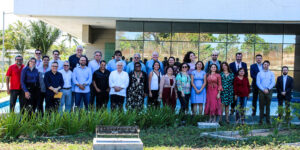
Oficina discute o SUS e os Desafios da Saúde Digital no Brasil 15 de outubro de 2019 Fonte: Arquivo Pessoal A Fundação Oswaldo Cruz no Ceará sediou em 15 de …

Pesquisadores desenvolvem tecnologias que impactam no SUS 12 de setembro de 2019 Fonte: Arquivo Pessoal As tecnologias digitais aplicadas à saúde contribuem diretamente para a governança dos Sistemas de Saúde, …